

វិចារណកថា
Explore the latest news, expert articles, and market outlooks to stay ahead of industry trends.
បន្ទប់ព័ត៌មាន

Banjaran Asset Management (Cambodia) Participates in Green Cleaning Event
Koh Pich, Phnom Penh – Banjaran Asset Management (Cambodia) PLC proudly participated in a Green Cleaning Event held on Diamond Island, reinforcing its commitment to environmental protection and sustainability. The event aimed to raise awareness about the importance of maintaining clean and green spaces while encouraging community involvement in environmental initiatives. During the event, employees from Banjaran Asset Management joined local volunteers and community members in various cleaning activities, including litter collection and environmental education sessions. This hands-on approach not only contributed to the beautification of Diamond Island but also served to educate participants about the principles of environmental stewardship and the necessity of preserving natural resources for future generations. “We believe that corporate responsibility extends beyond financial success; it includes being active stewards of our environment. By taking part in events like this, we hope to inspire others in the business community to contribute to a cleaner and greener Cambodia.” Ben Lee, Managing Director of Banjaran Asset Management (Cambodia), expressed pride in the company’s participation. The Green Cleaning Event showcased the importance of collective efforts in promoting sustainability, with various organizations and local government representatives coming together to set a positive example. Banjaran Asset Management’s involvement highlights its dedication to not only advancing financial services but also fostering a culture of environmental consciousness within the Kingdom. As part of its broader corporate social responsibility strategy, Banjaran Asset Management (Cambodia) aims to continue engaging in initiatives that benefit both the community and the environment, further establishing itself as a responsible leader in Cambodia’s financial sector.

Banjaran Asset Management (Cambodia) and Stronghold Trustee Collaborate on Market-Leading Public Investment Fund
Phnom Penh - A significant signing ceremony took place between Banjaran Asset Management (Cambodia) PLC and Stronghold Trustee Co., Ltd. The event, presided over by H.E. SOU Socheat, Director General of the Securities and Exchange Regulator of Cambodia (SERC), alongside other key officials, marked the collaboration for launching Cambodia’s first public fund and collective investment scheme. Pending approval from the SERC, this initiative will be a landmark achievement in the Kingdom’s financial services sector, providing retail investors with alternative investment options beyond traditional bank deposits. The fund will be managed by Banjaran Asset Management (Cambodia), with Stronghold Trustee serving as the trustee and Singapore-based Banjaran Asset Management as the investment adviser. This collaboration will offer Cambodian investors access to international markets without the need to travel to financial centers like Hong Kong and Singapore. Hans Chen, CEO of Stronghold, expressed excitement for the launch, emphasizing the professionalism and expertise that Stronghold brings to the initiative. Ben Lee, Managing Director of Banjaran Asset Management (Cambodia), highlighted the incorporation of international fund management practices and the training provided to local professionals in the fund management ecosystem. Established in 2022, Banjaran Asset Management (Cambodia) operates under a fund management license issued by the SERC, as part of a joint venture with Banjaran Holdings Pte Ltd, Best Magnet Capital Co., Ltd, and Primo Plus Co., Ltd. Stronghold Trustee, the first licensed trustee under the Cambodian Trust Law, specializes in trust services tailored to client needs. With approximately $5 billion in assets under management, Banjaran Asset Management Pte Ltd (BAMPL) in Singapore further solidifies its expertise in investment management, offering a variety of asset classes. The launch of this public investment fund represents a pivotal step in Cambodia’s financial landscape, providing new wealth growth opportunities for local investors and setting the stage for future advancements in the sector. More News Cambodia Investment Review Securities and Exchange Regulator of Cambodia Trust Regulator

SERC Welcomes Singapore’s Banjaran Asset Management for Strategic Talks on Cambodia’s Securities Sector
04 May 2022, Phnom Penh In a notable demonstration of Cambodia's ongoing commitment to fostering the growth and modernization of its capital markets, His Excellency Sou Socheat , Delegate of the Royal Government in charge as Director General of the Securities and Exchange Regulator of Cambodia (SERC), together with His Excellency Dr. Vin Pheakdey , Deputy Director General of SERC, officially welcomed the executive leadership team from Banjaran Asset Management Pte Ltd (BAMPL), a Singapore-based asset management firm, during their visit to the Kingdom of Cambodia in May 04 2022. The visiting delegation was led by Mr. Aaron Ng , BAMPL CEO, and Mr. Low Hon-Yu Low , BAMPL Executive Director. The meeting served as a crucial platform to discuss strategic cooperation and potential business opportunities within Cambodia's developing securities sector. H.E. Sou Socheat provided a comprehensive overview of Cambodia's capital market, detailing its regulatory frameworks, investment climate, and institutional infrastructure. He underscored the government’s ongoing reforms aimed at ensuring transparency, protecting investors, and achieving international compliance, all designed to position Cambodia as an attractive emerging market. Discussions also focused on Cambodia's initiatives to deepen its market by diversifying financial instruments and encouraging participation from both domestic and international players. BAMPL expressed significant interest in exploring investment and operational opportunities in Cambodia, aligning with their broader Asia-Pacific strategy to expand their presence and offer diversified market access to investors. H.E. Dr. Vin Pheakdey further emphasized the importance of regulatory compliance, robust risk management standards, and continuous investor education. He assured BAMPL of SERC's support in facilitating responsible market entry for reputable foreign institutions. The BAMPL team shared insights into their business model, regional experiences, and their vision for contributing to Cambodia's capital markets. Their proposed business plan, including fund management and distribution services, were reviewed in detail. H.E. Sou Socheat concluded the meeting by providing constructive feedback and outlining the key regulatory requirements for licensing and operational approval. He offered practical guidance on navigating the legal and procedural aspects of establishing a presence in Cambodia’s securities sector, reaffirming SERC’s openness to engaging with serious investors and partners who align with Cambodia’s financial development goals. This meeting underscored Cambodia’s proactive efforts to foster a dynamic, inclusive, and internationally connected capital market, signaling its readiness for greater integration into the broader Asia-Pacific financial ecosystem. This paves the way for increased foreign investment, product innovation, and accelerated long-term economic growth beneficial to both local and global investors.
ទស្សនៈទីផ្សារ
2025 October Market Outlook: Between Tariffs and Growth — Searching for Stability
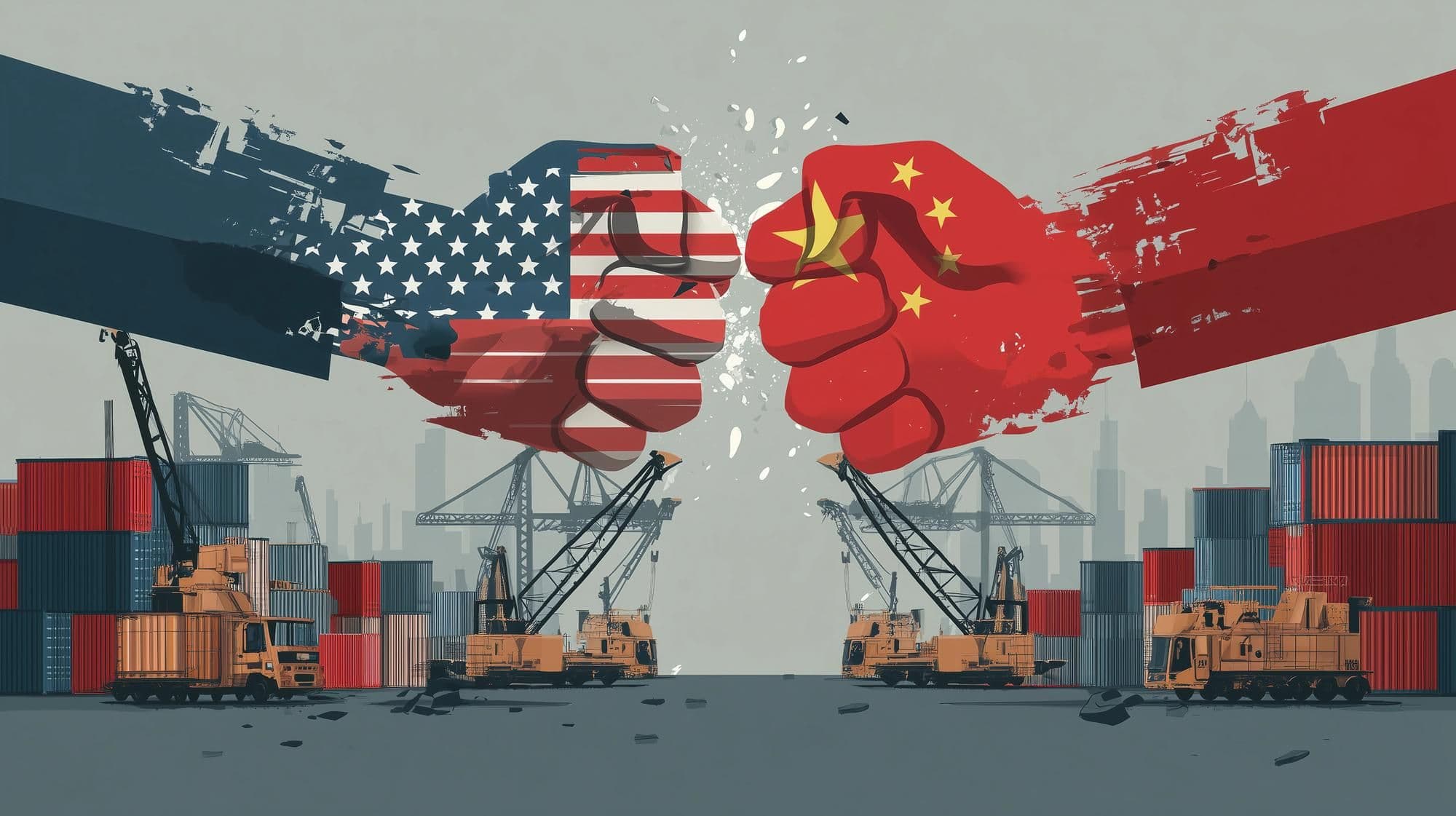
Towards the end of September, in an effort to protect American jobs, the Trump administration made surprised changes to immigration visa laws that target foreign talent, particularly those working in the U.S. technology sector. Amongst the heaviest users of this targeted immigration visa scheme include Amazon.com Services LLC, Meta Platforms Inc, Apple Inc and Google LLC. Later that month, the U.S. Immigration Service issued guidance that included exceptions, thus stabilising concerns. However, the labour market outlook remains uncertain with the shutdown of the U.S. government, which began on October 1st. Consequently, data reports such as the official U.S. monthly jobs report and the labour-intensive Consumer Price Index report would likely be delayed amidst the impending mass firing and unpaid furlough of certain segments of federal workers. In China, September data showed low domestic demand, a continued property downturn and the weakest economic growth in a year. With the ongoing US-China trade war, Chinese regulators have urged against the use of Nvidia chips completely, stating that domestic chips are adequate in delivering comparable computing power. As such, Chinese domestic chipmakers have benefitted from efforts to become self-sufficient, and this move should serve as a catalyst to grow the technology sector. China tightened exports of rare earth where products that contain certain rare earths or traces of it sourced from China will now require an export license. With a 70% share of global supply, the supply crunch would be felt by the U.S. and Europe. In response, the U.S. imposed a 100% import surtax on Chinese goods effective November 1st, ahead of the 90-day tariff truce that was set to end on November 9th. Despite the trade war uncertainty, Chinese exports rebounded in September from a slump in August, beating estimates and increasing 8.3% year over year while imports grew 7.4%. The sweep of high tariffs from the U.S. have led China to seek imports from other avenues, such as Brazil and Argentina for soybean, which has caused farmers in the U.S. to scramble for buyers. On the other hand, aggressive price competition among manufacturers in China have led to what has been termed ‘Chinese dumping’, where low prices due to Chinese imports are alarming domestic producers in India, Africa and South-east Asia. Looking ahead, we remain cautiously optimistic of the global markets. In the U.S., businesses and households are concerned over trade tariffs, changes to immigration laws and the shutdown of the U.S. government. The structural imbalance in China represented by slow domestic growth and heavy reliance on export further weighs on global financial markets and investor confidence. Despite the uncertainty, there were reports of pockets of positive news. Alternative data in the U.S. such as restaurant bookings and theatre box office receipts reflects resilient consumer activity. The number of seated diners was up 9% from last year and domestic box office grossed 13% more than the previous month.

2025 September Market Outlook: Bullish Trends Meet a Cautious Reality
August began with higher reciprocal tariffs imposed by the U.S. on its trading partners. Notably, a 50% tariff on India that included a 25% penalty for purchasing Russian oil and weapons. Meanwhile, the U.S. and China extended a tariff truce for another 90 days to 10 November. Credit spreads narrowed further in August, indicating continued high investor risk appetite. Equity markets broadly advanced, reinforcing bullish sentiment amid strong earnings from technology driven firms. That said, investors are growing cautious about returns from technology and particularly, AI investments. Economic data indicated a struggling Chinese economy with low factory output, weak retail sales, troubled property sector and high unemployment. This raises the likelihood of policy support in the fourth quarter; economists suggest monetary easing and fiscal expansion. Despite underwhelming economic data, the Chinese stock market stands at a stark contrast to the economy with the Shanghai Composite Index at a 10-year high. Additionally, the government announced their aim to triple chip output in 2026. The reluctance of household spending is evident in the size of savings worth more than 60% of the total value of the Chinese stock markets, leading analysts to believe that the rally is supported by long-term and institutional investors. Key drivers include the strategic deployment of state funds, inflows from global institutional investors—such as major U.S. financial institutions like Goldman Sachs and JPMorgan, as well as large Singapore-based funds—and increased participation by domestic mutual funds and insurers. Looking ahead, we remain cautiously optimistic. While trade frictions, sticky inflation, and geopolitical tensions continue to weigh on sentiment, global activity remains resilient. Primarily driven by technology companies’ robust earnings, U.S. equities performed well, with S&P 500 and Nasdaq reaching record highs in August. Despite an initial pullback, markets have broadly rallied since, buoyed by expectations of two more rate cuts this year, moderating inflation, and resilient corporate earnings. Within Asia, institutional investors looking for diversification beyond U.S. assets are lured by China’s stock market bull run. Against this backdrop, we maintain a disciplined and balanced approach, grounded in bottom-up fundamental analysis in our portfolio construction.

2025 August Market Outlook: AI and Tech Earnings Fuel Optimism Despite Uncertainty
Investors continue to watch closely for disinflationary indicators and the Fed's response. Despite macro uncertainties, the narrowing credit spread likely indicates the ongoing high investors' risk appetite. The strong earnings from AI-driven tech companies further supported investors' confidence, albeit after a slight June pullback. In Asia, the negative PPI in China reflects Chinese consumers becoming more price-sensitive and cutting back on non-essential spending. Sectors like electric vehicles ("EVs") and food delivery companies have slashed prices to stay competitive. The government launched an "anti-involution" campaign to combat the deepening price wars, and the initiatives such as pricing oversight have shown early signs of effectiveness. Despite this, the Chinese and Hong Kong equity markets have gained, with AI-linked firms and industrial-tech stocks driving market performance. Looking ahead, we remain cautiously optimistic. Despite continued geopolitical tensions and macro uncertainties weighing on sentiment, resilient corporate earnings and tightening credit spreads would likely continue to support the global equity markets, notably in the AI and tech sectors. Meanwhile, we believe the Fed will remain cautious, closely watching sticky inflationary indicators; if inflation continues to ease, gradual rate cuts are likely. In spite of trade reroutes and structural market challenges leading to overcapacity, Asian equity markets performed better than expected, supported by a strengthened macro backdrop. Against this landscape, we maintain a disciplined and balanced approach, grounded in bottom-up fundamental analysis in our portfolio construction.

2025 July Market Outlook: Resilient Earnings and Renewed Trade Ties Keep Investor Confidence Intact
Since June, investor sentiment has gradually improved, supported by resilient corporate earnings, stronger-than-expected macroeconomic indicators, and measured progress in trade diplomacy. Despite lingering policy uncertainty and geopolitical risks, market conditions have remained relatively calm, with volatility largely contained. Trade policy continues to be a central concern. The Trump administration’s 90-day pause on tariffs is set to expire on August 1, with proposed tariffs of up to 50% on autos and consumer electronics still under consideration. However, in spite of looming tariff risks, the successful negotiation of bilateral trade agreements - with Japan, the U.K., and South Korea - has helped bolster investor confidence. The U.S. - Japan deal, which includes a reported US$550 billion investment commitment, has further supported sentiments across Asian markets, which benefits from improved trade ties and regional policy coordination. Meanwhile, the One Big Beautiful Bill (BBB Act), which offers generous tax incentives - including permanent R&D deductions and 100% expensing of production property - has provided notable support to the technology, semiconductor, and data center sectors. While the BBB Act raises concerns over fiscal deficits, it has already helped sustain momentum in pro-growth and AI-exposed equities. In Asia, China’s Q2 GDP growth exceeded expectations, underpinned by strong industrial output and a rebound in exports, driven in part by front-loaded shipments ahead of potential new tariffs. However, weakness in retail sales and property investment underscores China’s continued reliance on external demand and industrial production over domestic consumption - raising expectations for further targeted fiscal support in the second half of 2025. Looking ahead, we remain cautiously optimistic. While U.S. headline CPI rose in June, disinflationary trends are still evident in core components. Profitability remains strong in key sectors, and Asia continues to benefit from trade gains and pro-growth policies. However, with valuation multiples remaining elevated, the upcoming earnings season will play a pivotal role in supporting the valuation premium. With liquidity conditions stable and market volatility subdued, we maintain a disciplined and balanced approach, guided by bottom-up fundamental analysis in our portfolio construction.

2025 June Market Outlook: Resilient Markets in a World of Risk
Since May, markets have continued to operate in an environment marked by policy uncertainty and rising geopolitical risks. The Trump administration’s 90-day pause on “Liberation Day Tariffs” offered temporary relief, but limited progress in broader trade talks - especially with the EU and Japan - has kept investors cautious. While a limited agreement with the U.K. was reached, the overall trade landscape remains unresolved, affecting sentiment and weighing on risk appetite. Geopolitical tensions escalated in June, particularly with the Israel-Iran conflict. Iran’s threat to close the Strait of Hormuz - a key route for around 20% of global oil supply - triggered a sharp rise in oil prices. This has increased concerns about supply disruptions, global shipping rerouting, and broader instability in the region. The timing of this conflict has added complexity to the inflation outlook. Central banks, including the Fed, were preparing for a potential shift toward easing. However, the surge in oil prices has introduced new uncertainty. In its June meeting, the Fed held rates steady and signaled only one possible cut for the rest of the year, citing persistent services inflation and elevated geopolitical risks. A prolonged conflict could keep oil prices elevated, which may delay or limit policy easing. Concerns over U.S. fiscal stability, driven by political gridlock and unresolved budget discussions, have added to the uncertainty. Despite these challenges, we maintain a cautiously optimistic outlook. Disinflationary trends are taking hold, and market volatility has stayed relatively contained. With a potential easing in tariff tensions, expectations of reduced geopolitical friction, and supportive fiscal and probusiness policies in China and the U.S., global equities are expected to continue recovery. Against this backdrop, we maintain a disciplined and balanced approach, guided by bottom-up fundamental analysis in our portfolio construction.

2025 May Market Outlook: Navigating Volatility Amid Trade Tensions and Monetary Policy Caution
Global Markets The global stock market, as represented by the MSCI World Index, rose 0.74% in April. Gains were primarily driven by robust performance in non-U.S. equities and a temporary easing of global trade tensions. While U.S. markets experienced sharp mid-month volatility following the announcement of sweeping new tariffs, a partial rollback—excluding China—helped restore investor confidence. Resilience in large-cap technology stocks and a rotation into defensive sectors also contributed to gains. Additionally, expectations of monetary easing in select developed markets outside the U.S. provided a tailwind, helping global equities recover despite ongoing geopolitical and trade-related uncertainty. General Outlook and Views April began with heightened volatility following the surprise rollout of the “Liberation Day Tariffs,” which included a blanket 10% levy on all imports and steeper country-specific rates. Markets reacted swiftly—equities tumbled, and Treasury yields dropped as risk-off sentiment took hold. A temporary rebound followed the U.S. decision to pause most tariffs, excluding those on China. However, China’s swift retaliation reignited trade tensions, pulling markets lower once again. Despite the volatility and uncertainty, equities have since staged a robust recovery, supported by a tentative trade truce between the two economic powers. Investor sentiment was buoyed by the prospect of renewed negotiations, contributing to a broad-based rally. Meanwhile, the Federal Reserve opted to keep interest rates unchanged, adopting a cautious, data-dependent approach as it assesses the broader impact of trade disruptions. Recession risks, however, remain elevated amid subdued consumer sentiment, persistent macroeconomic headwinds, and the fragile state of U.S.–China trade negotiations. The Fed’s decision to hold rates steady reinforces its wait-and-see stance, while the recent credit rating downgrade by Moody’s has drawn renewed attention to the U.S.’s long-term fiscal vulnerabilities—adding another layer of uncertainty to the market outlook. Nonetheless, we remain cautiously optimistic. While the broader economic landscape remains clouded by trade policy uncertainty and political volatility, the possibility of continued U.S.–China engagement offers some hope for de-escalation and market stabilization. Against this backdrop of fragile trade dynamics, tightening fiscal credibility, and a patient Fed, we remain focused on navigating near-term volatility through disciplined portfolio positioning. We continue to monitor developments closely, recognizing that trade relations, monetary policy, and political developments will remain key drivers of global growth and market stability in the months ahead. Given the current environment, we believe it remains prudent to refrain from significant portfolio shifts until greater policy clarity emerges.