ការយល់ដឹង
Article2 មករា 2024អាន 6 នាទី

Investment Education Series related to Collective Investment Scheme (Part Three)

Investment Education Series related to Collective Investment Scheme (Part Three)

The Investment in Collective Investment Scheme
In part two of the Investment Education Series, we discussed the needs and merits of investing as well as the benefits of investment diversification. The article concluded that an investment fund, or Collective Investment Scheme fund offers the best option for individuals to invest and grow their wealth steadily over time. A fund also helps to lower investment risk through diversification, all while keeping investing affordable to the public.

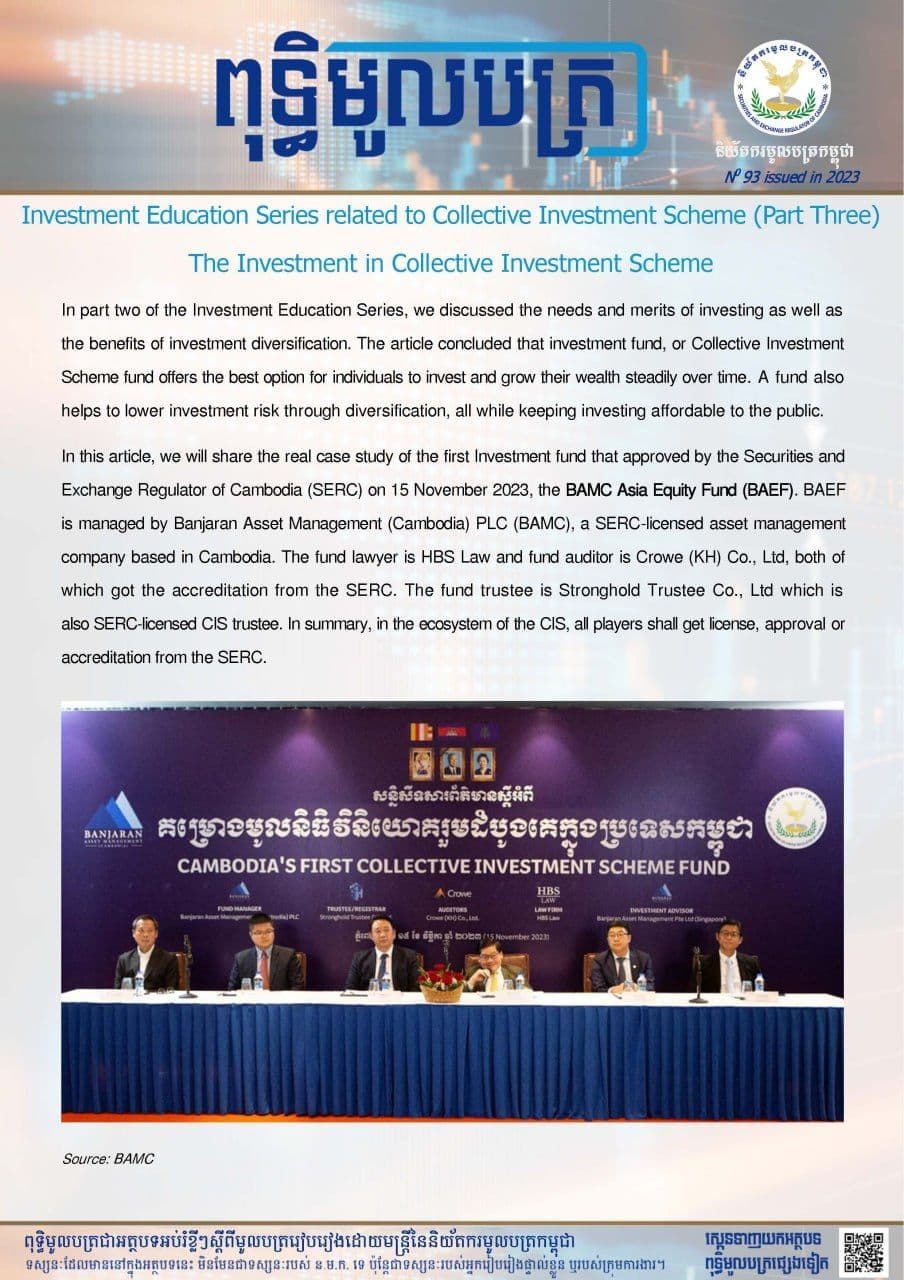
In this article, we will share the real case study of the first Investment fund that was approved by the Securities and Exchange Regulator of Cambodia (SERC) on 15 November 2023, the BAMC Asia Equity Fund (BAEF). BAEF is managed by Banjaran Asset Management (Cambodia) PLC (BAMC), a SERC-licensed asset management company based in Cambodia. The fund lawyer is HBS Law and the fund auditor is Crowe (KH) Co., Ltd, both of which got the accreditation from the SERC. The fund trustee is Stronghold Trustee Co., Ltd which is also a SERC-licensed CIS trustee. In summary, in the ecosystem of the CIS, all players shall get a license, approval, or accreditation from the SERC.

Press Conference 1st KH CIS 08

About BAMC Asia Equity Fund
BAEF is a fund investing in a diversified portfolio of 30 or more companies listed on major stock exchanges across Asia Pacific Ex-Japan. The fund targets to provide the benefits of investing in Asia, which economists globally see as the premier growth region in the coming years. The fund’s tagline is “The Rise of Asia”. According to the disclosure documents, BAEF targets a return of 7% to 10% per annum over the medium to long term, yet this return is not guaranteed. The investment in fund is considered as a form of a regular savings plan. The invested amount can eventually be used for children's education, healthcare, to part fund the purchase of a house, or for retirement. To invest in the fund, the investor shall obtain an investor ID from the SERC first. However, for those who already have the investor ID, they do not need to re-apply for the investor ID.

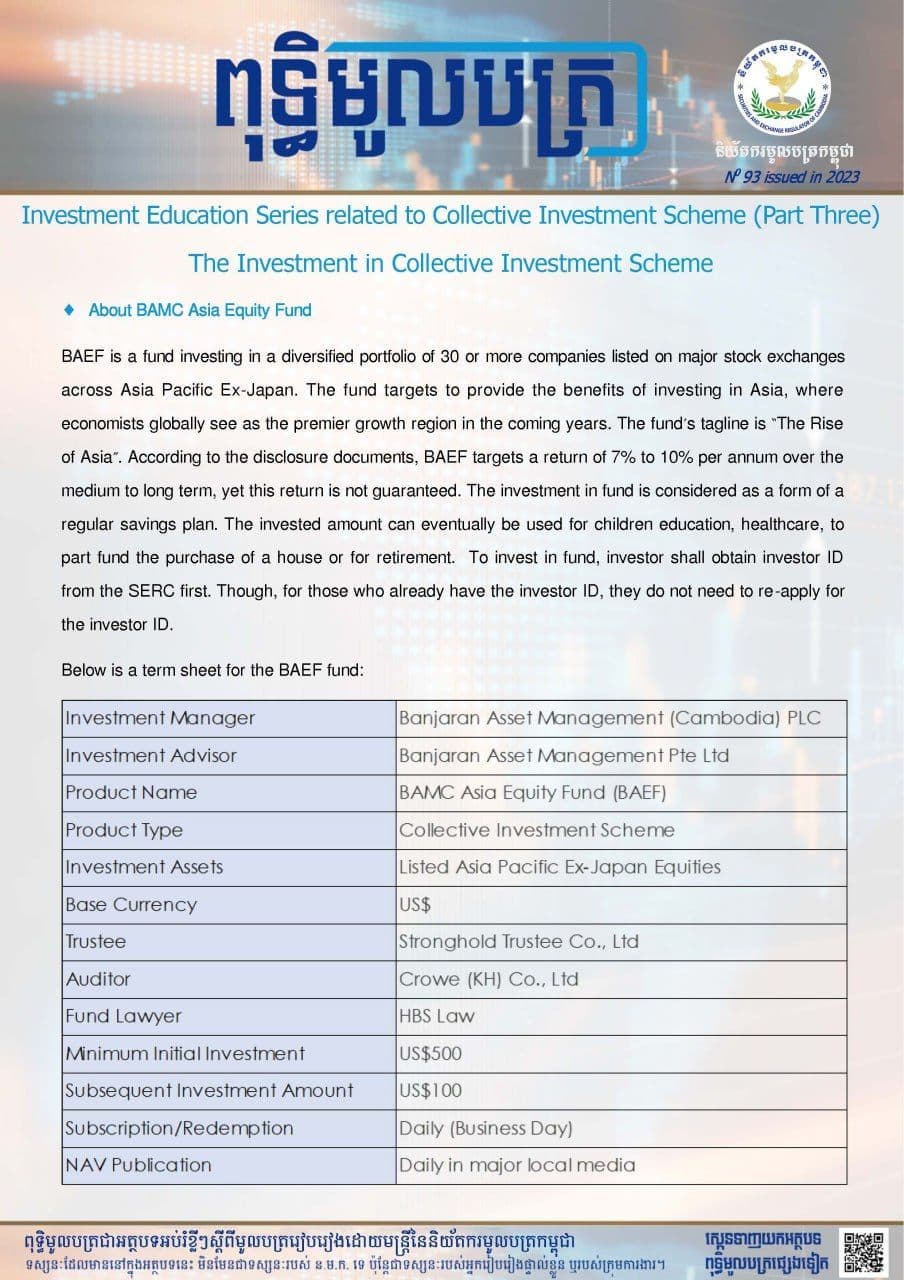
Below is a term sheet for the BAEF fund:

BAEF

Key Consideration Before Making Investment Decision
Generally, fund managers make investments using basic approaches like the top-down approach and bottom-up approach. A top-down approach is when the fund manager looks at macro factors such as, economic cycles, inflation, interest rates, global trends, etc. The bottom-up approach is when the fund manager looks at the features of the individual securities that they invest in such as, the balance sheet, profit and loss statement, management, products, and services, etc. The BAEF adopts both approaches in making their investments.

Bottom-up Approach: Sustainable Growth in the Long-term
The fund manager will select companies that have proven sustainable business models and have proven track records. The fund manager will look at audited financial statements, valuation, and quality of management amongst other things.

Top-down Approach: Why Invest in Asia?

  1. Stable Productive Population in the coming 10 to 20 years
    Asia has a large population base and a favorable demographics. It has a large segment of the younger population which will translate to a stable productive workforce over the next 10 to 20 years. This will result in higher income and higher consumption. These factors will help to drive the region’s economy and its businesses to grow. Relative to poor demographics from regions like the US and Europe, Asia is preferred.
  2. Strong Economic Growth
    In terms of economic growth, Asia is also growing faster and is bigger than the EU and North America. According to an IMF report dated Oct 2023, real GDP growth in 2023 is highest in Asia Pacific at 4.4% vs EU at 1% and North America at 2.1%. As % a share of the total world’s GDP, Asia Pacific share is 45.6%, the EU at 21.0% and North America at 18.7%.
  3. Benefits from the World’s Largest Free-Trade Agreement and Pro-Business Governments Asia’s economic growth will be further enhanced after 15 Asian countries recently signed a free-trade agreement known as the Regional Comprehensive Economic Partnership (RCEP), which will be the
    world’s largest free-trading bloc. The free-trade agreement should enhance trading activities and thus further drive GDP growth as a result. In its forecast, IMF projected Asia to remain as the strongest GDP growth region in 2028 at 3.9% vs EU at 1.6% and North America at 2.1%. 
    Investment Education Series related to Collective Investment Scheme (Part Three)
  4. Asian Companies are Recognizable Globally
    Asia now has many homegrown listed companies which are recognizable globally. These companies are well-managed and have strong financials. They include companies like Singapore Airlines, Alibaba, Tencent, Samsung Electronics, TSMC, Grab, BYD and many others.
  5. Asia Markets Remain Cheap
    Despite Asia’s bigger population base and stronger economic growth, Asian stocks trade at much lower levels as compared to EU and US stocks based on valuation ratios like price-to-earnings, price-to-book value, and price-to-sales. These ratios are financial metrics that measure and analyze stock prices in unit terms and compare them with those of peers or competitors. The lower the financial ratio, typically the more attractive is the stock market or a particular stock.

    Furthermore, Asia ex-Japan accounts for 58% of the world’s population, and 48% of the world's economy, yet it accounts for only 12.42% of the investments made in the stock markets globally. BAMC views that the under-representation of Asian stock investments will have to be adjusted upwards eventually.

Is it the Right Time to Invest Now?
There is no right or wrong time to invest in the stock markets. Investing is a disciplined approach to set aside the savings and put them regularly into investments like an investment fund. Past market cycles show that each time markets fall, they will rebound. And when they rebound, they will set a new market high. In other words, stock markets tend to rise over the long term though in between, they may correct according to economic
cycle or on non-economic-related events like war, pandemic, etc.

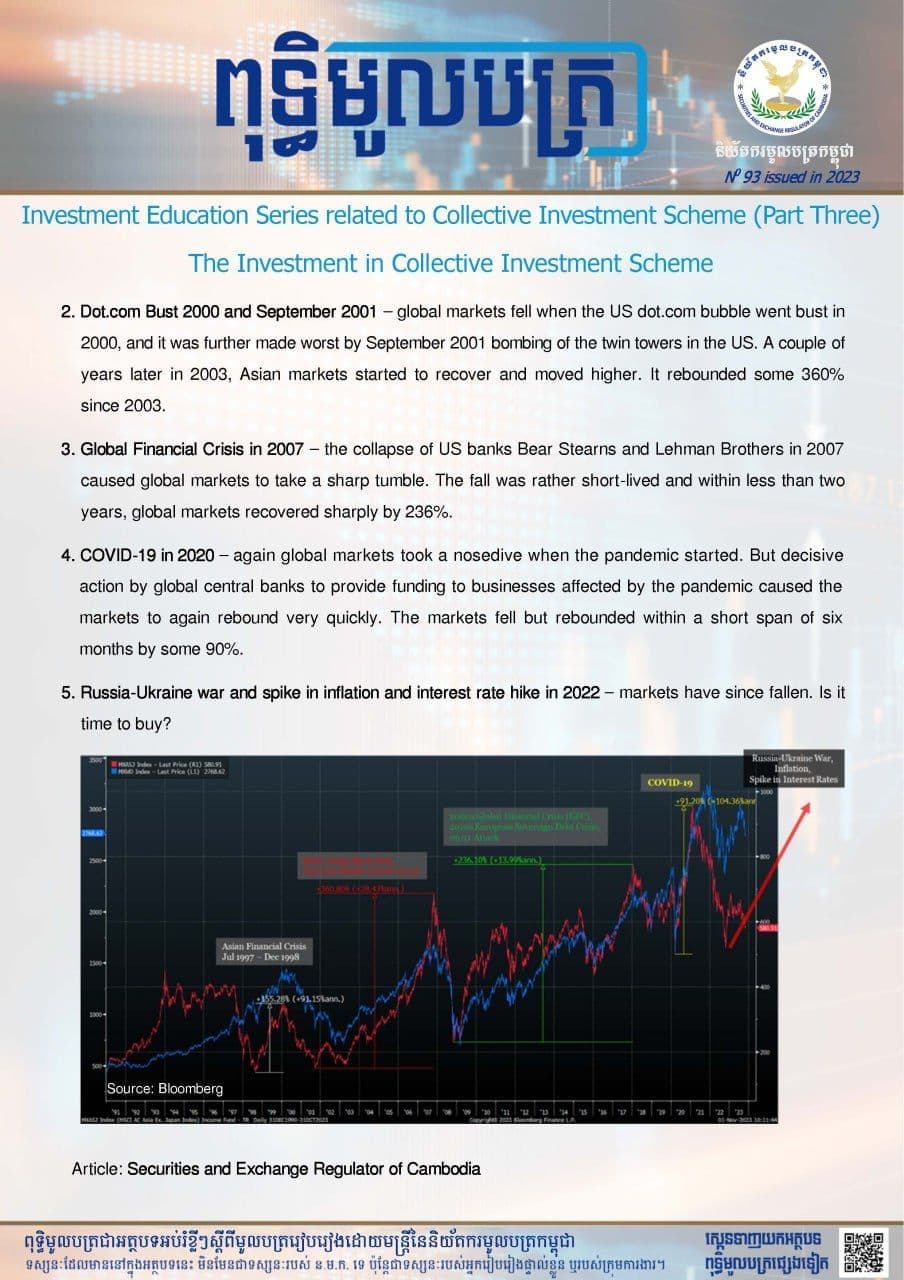
In the current situation, stock markets in general have fallen since the beginning of 2022 on the back of several key events like the Russian-Ukraine war and the sharp increase in US interest rate. Is this an opportune time to invest? BAMC has analyzed the past market cycles and noted that after each significant event that had caused stocks to fall, they had rebounded sharply after riding out that event:

  1. Asian Financial Crisis in 1997 – the collapse of Asian currencies led by the Thai Baht and which spread to other Asian currencies, caused Asian markets to tumble. But they rebounded some 155% from the low
    in 1997 until 2000.
  2. Dot.com Bust 2000 and September 2001 – global markets fell when the US dot.com bubble went bust in 2000, and it was further made worse by the September 2001 bombing of the Twin Towers in the US. A couple of years later in 2003, Asian markets started to recover and moved higher. It rebounded some 360% since 2003.
  3. Global Financial Crisis in 2007 – the collapse of US banks Bear Stearns and Lehman Brothers in 2007 caused global markets to take a sharp tumble. The fall was rather short-lived and within less than two years, global markets recovered sharply by 236%.
  4. COVID-19 in 2020 – again global markets took a nosedive when the pandemic started. However decisive action by global central banks to provide funding to businesses affected by the pandemic caused the markets to again rebound very quickly. The markets fell but rebounded within a short span of six months by some 90%.
  5. Russia-Ukraine war and spike in inflation and interest rate hike in 2022 – markets have since fallen. Is it time to buy?
graft

An article from the Securities & Exchange Regulator of Cambodia (SERC)
ចែករំលែក

ការយល់ដឹងបន្ថែម

2026 October Market Outlook: Asia Markets – AI Valuation Concerns and Rising Geopolitical Risks
Market Outlook2 វិច្ឆិកា 2026

2026 October Market Outlook: Asia Markets – AI Valuation Concerns and Rising Geopolitical Risks

The direction of US monetary policy remains a key source of uncertainty. Minutes from the September Federal Open Market Committee (“FOMC”) meeting indicated that a further rate increase before year-end remains possible. However, Chair Warsh has declined to commit to a path, identifying the October and December meetings as the key decision points. Ahead of the next FOMC meeting on 27–28 October, the International Monetary Fund has cautioned that uncertainty over US monetary policy could keep Asian financial markets volatile. The recent sell-off has also brought the financing of AI investment into sharper focus. Chair Warsh noted that large technology companies raising funds in the bond market are adding to competition for capital. In our view, investors are likely to place greater scrutiny on the returns these companies generate from their AI spending. Developments in the Middle East remain a key swing factor for oil prices and inflation. Before the conflict began in late February, the Strait of Hormuz carried around one-fifth of global oil supply. Within Asia, the most significant development has been in Indonesia. On 15 October, index provider MSCI Inc. launched a consultation on reclassifying Indonesia from Emerging Market to Standalone Market status, citing insufficient progress on market transparency, concentrated shareholdings and weak enforcement. This contrasts with FTSE Russell, which reaffirmed Indonesia’s emerging market status. The Jakarta Composite Index fell 8.0% following the announcement, which triggered a trading halt. MSCI has also frozen certain index changes for Indonesian securities, including new additions, until further notice. The announcement adds to a difficult year for Indonesia, whose stock market has fallen more than 30% to become the world’s worst performing this year, according to Bloomberg, while Moody’s and Fitch have both revised the sovereign rating outlook to negative. With the consultation open until 30 April 2027, analysts expect foreign outflows to continue. In North Asia, the October sell-off highlighted how exposed South Korea and Taiwan have become to swings in AI sentiment after very strong gains over the past year. The KOSPI and TAIEX rose 86.7% and 80.6% respectively over the past year, and the TAIEX’s price-to-earnings ratio has expanded to 27.9 times from 23.1 times. Singapore again demonstrated its defensive qualities, with the Straits Times Index declining only 0.5% on 15 October, a far smaller fall than its North Asian peers. Overall, investor sentiment has shifted from chasing AI momentum towards greater caution on valuations, funding costs, and geopolitical risk. In this environment, we remain focused on businesses with strong balance sheets, sustainable earnings and pricing power, which we believe are better positioned to navigate persistent inflation and energy price shocks. We continue to apply a disciplined, bottom-up approach to stock selection and to maintain diversification across geographies and themes.

អាន 3 នាទីអានបន្ថែម
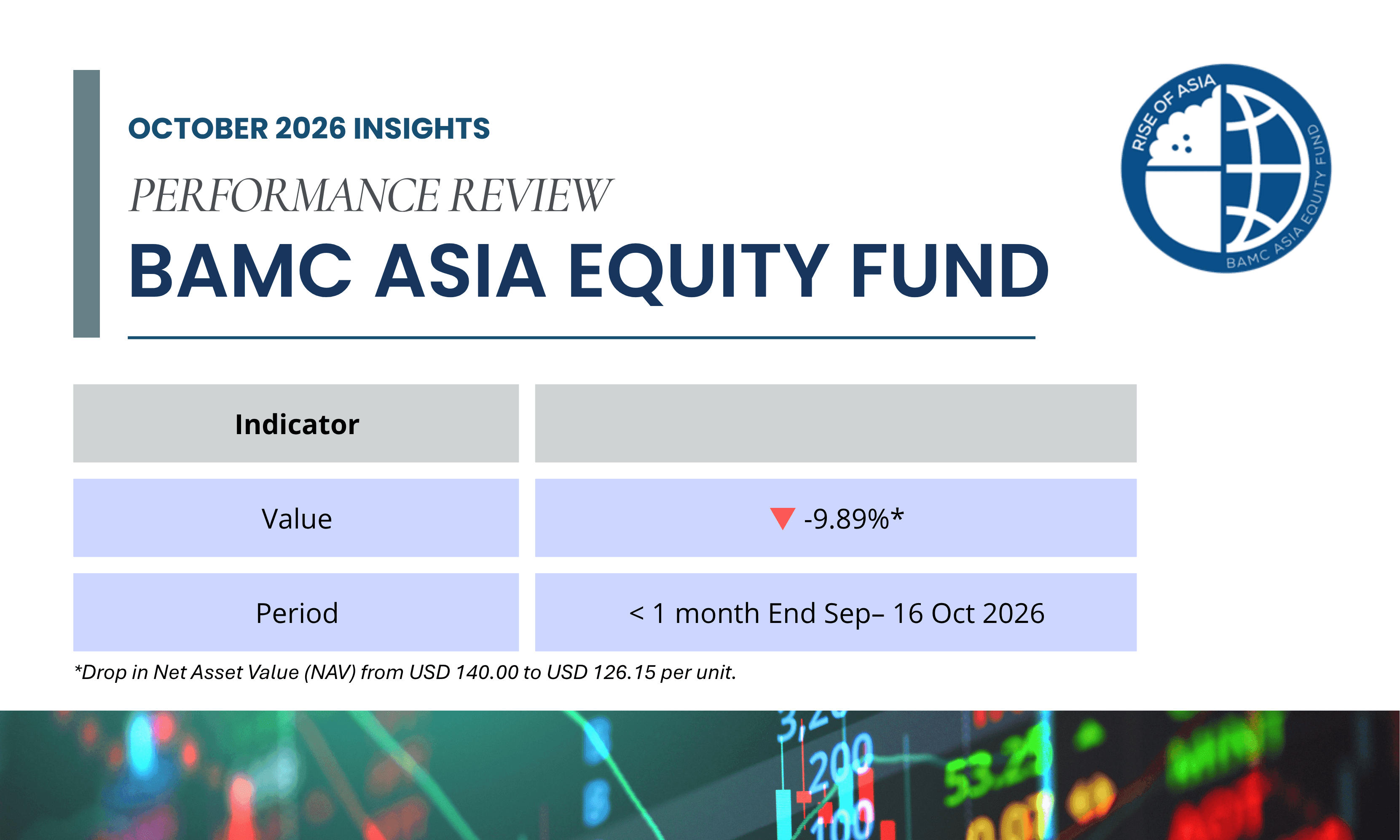
លទ្ធផលមូលនិធិមូលបត្រកម្មសិទ្ធិអាស៊ី ប៊ីអេអឹមស៊ី (BAEF Fund) គិតត្រឹមថ្ងៃទី១៦ ខែតុលា ឆ្នាំ២០២៦
Announcement23 តុលា 2026

លទ្ធផលមូលនិធិមូលបត្រកម្មសិទ្ធិអាស៊ី ប៊ីអេអឹមស៊ី (BAEF Fund) គិតត្រឹមថ្ងៃទី១៦ ខែតុលា ឆ្នាំ២០២៦

ស្ថានភាពទីផ្សារក្នុងខែតុលា ចាប់តាំងពីចុងខែកញ្ញា ទីផ្សារភាគហ៊ុនសកលបានប្រឈមនឹងសម្ពាធពីការកើនឡើងនៃ ថ្លៃដើមរបស់ប្រាក់ កម្ចី ( Borrowing costs) និង ការត្រួតពិនិត្យកាន់តែខ្លាំងឡើងលើ ផលចំណេញពី ការចំណាយ ពាក់ព័ន្ធនឹង បច្ចេកវិទ្យា បញ្ញាសប្បនិម្មិត (AI) ។ អតិផរណានៅក្នុង សហរដ្ឋ អាមេរិកបានកើនឡើងខ្ពស់ លើសពី ការរំពឹងទុក នាំឱ្យមានការ ព្យាករណ៍ថា ធនាគារកណ្តាល សហរដ្ឋ អាមេរិក នឹង រឹតបន្តឹងគោលនយោបាយរូបិយវត្ថុបន្ថែមទៀត បណ្ដាលឱ្យ ប៉ះពាល់ យ៉ាង ខ្លាំងជា ពិសេសលើការវាយតម្លៃភាគហ៊ុននៃវិស័យបច្ចេកវិទ្យា និងវិស័យពាក់កណ្តាលចម្លង ( Semiconductor) ។ តម្លៃប្រេងដែលបន្តកើនឡើងស្ថិតក្នុងកម្រិតខ្ពស់ បានបន្ថែមសម្ពាធ មួយ បន្ថែមទៀតទៅលើក្តីបារម្ភ អំពី អតិផរណា។ ជារួម ទីផ្សារភាគហ៊ុនក្នុងតំបន់អាស៊ីដែល ផ្ដោតខ្លាំង លើវិស័យបច្ចេកវិទ្យា បានទទួលរងនូវសម្ពាធលក់ចេញក្នុងទំហំ ដ៏ច្រើន នៅក្នុងអំឡុងពេលនៃការចុះខ្សោយនៃវិស័យបច្ចេកវិទ្យាសកលក្នុងខែតុលា។ ការវិនិយោគ របស់យើងលើភាគហ៊ុនក្នុងតំបន់អាស៊ី បានឆ្លុះបញ្ចាំងពីការផ្តោតអារម្មណ៍របស់យើងលើឱកាសកំណើនរយៈពេលវែងនៅក្នុ ង តំបន់នេះ។ បម្រែបម្រួលថ្លៃភាគហ៊ុនយ៉ាងគំហុក ក្នុងរយៈពេលខ្លី គឺជាហានិភ័យដែលកើតមានឡើងជាធម្មជាតិក្នុងវិធីសាស្ត្រវិនិយោគ មួយ នេះ ប៉ុន្តែការសម្រេចចិត្តវិនិយោគរបស់យើងនៅតែបន្ត ផ្ដល់អាទិ៍ភាព លើ មូលដ្ឋានគ្រឹះរបស់ក្រុមហ៊ុន និងសក្តានុពលរបស់ក្រុមហ៊ុនទាំងនោះក្នុងការបង្កើតផលចំណេញប្រកបដោយចីរ ភាព ក្នុងរយៈពេលវែង ។ មូលហេតុដែលនាំឱ្យ ផលប័ត្រវិនិយោគ មានការធ្លាក់ចុះ នៅក្នុងបរិបទនេះ កត្តាចម្បងដែលជិះឥទ្ធិពលអវិជ្ជមានដល់លទ្ធផលរបស់មូលនិធិ BAEF គឺការប្រមូលផ្តុំការ វិ និយោគលើភាគហ៊ុនប្រទេសកូរ៉េខាងត្បូង តៃវ៉ាន់ និងភាគហ៊ុនពាក់ព័ន្ធនឹងវិស័យពាក់កណ្តាលចម្លង ( Semiconductor) ដែលភាគហ៊ុនទាំងនេះបូកបញ្ចូលគ្នាមានទំហំ ៣២ , ៣% នៃផលប័ត្រវិនិយោគសរុប និង បានរួមចំណែកប្រមាណ ៤% ក្នុងទំហំនៃតម្លៃដែលបានធ្លាក់ចុះ។ មូលនិធិដែលអាចជួញដូរបាននៅប្រទេសកូរ៉េ ខាងត្បូង និងភាគហ៊ុនក្រុមហ៊ុន Samsung តែពីរមុខនេះ បានទាញទម្លាក់តម្លៃប្រមាណ ២% ទៅហើយ។ ប្រទេសកូរ៉េខាងត្បូង បានរងផលប៉ះពាល់យ៉ាងធ្ងន់ធ្ងរ ជាពិសេសពីការដកដើមទុនចេញ/ការលក់ចេញនូវភាគ ហ៊ុនពាក់ព័ន្ធនឹង បច្ចេកវិទ្យា បញ្ញាសប្បនិម្មិត (AI) ។ នៅថ្ងៃទី១៥ ខែតុលា សន្ទស្សន៍ភាគហ៊ុនគំរូ ( Benchmark index) របស់ប្រទេសនេះ បានធ្លាក់ចុះប្រមាណ ៨%។ ការធ្លាក់ចុះនៃតម្លៃភាគហ៊ុនរបស់ក្រុមហ៊ុន Samsung បានកើតឡើង បើទោះបីជាក្រុមហ៊ុនបានផ្ដល់ការព្យាករណ៍ថា ប្រាក់ចំណេញប្រតិបត្តិការ សម្រាប់ត្រីមាសទីបីនឹងកើនឡើងយ៉ាងច្រើនក៏ដោយ ដែលនេះបង្ហាញថាក្នុងរយៈពេលខ្លីក្តីបារម្ភលើការវាយតម្លៃ ភាគហ៊ុន លក្ខខណ្ឌហិរញ្ញប្បទាន និងការប្រកួតប្រជែង មានទម្ងន់ធ្ងន់ជាងភាពប្រសើរឡើងនៃប្រាក់ចំណេញ។ ការធ្លាក់ចុះនេះត្រូវបានបង្កើនទម្ងន់បន្ថែមទៀត ដោយសារការធ្លាក់ថ្លៃយ៉ាងគំហុកនៃតម្លៃភាគហ៊ុនរបស់ក្រុមហ៊ុន ខ្នាត តូច និងភាគហ៊ុនក្នុងវិស័យហិរញ្ញវត្ថុមួយចំនួននៅប្រទេសសិង្ហបុរី។ ភាគហ៊ុន Addvalue បានធ្លាក់ចុះ ២២ , ៩% , UOB Kay-Hian ធ្លាក់ចុះ ២៥ , ២% និង OCBC ធ្លាក់ចុះ ១០ , ៣%។ ធនាគារ OCBC បានប្រឈមមុខនឹងកត្តាជំរុញអវិជ្ជមានជាក់លាក់មួយ នៅពេលដែលស្ថាប័ន Citi បានទម្លាក់ចំណាត់ថ្នាក់ភាគហ៊ុននេះពី « អព្យាក្រឹត ( Neutral)» មក « លក់ ( Sell)» ដោយលើកឡើងពីហានិភ័យនៃប្រាក់ចំណេញត្រីមាសទីបី សម្ពាធលើគម្លាតអត្រាការប្រាក់សុទ្ធ ( Net interest margins) ដែលកើតចេញពីថ្លៃដើមប្រាក់បញ្ញើខ្ពស់ជាងមុន និងលទ្ធភាពនៃការត្រឡប់មករកកម្រិតធម្មតានៃប្រាក់ចំណូលពីសេវាកម្មគ្រប់គ្រងទ្រព្យសកម្ម ដែលធ្លាប់តែកើន ឡើងយ៉ាងខ្លាំងខុសធម្មតាក្នុងឆមាសទីមួយ។ ចំណែកឯភាពចុះខ្សោយនៃតម្លៃភាគហ៊ុន Addvalue គឺបណ្តាល ម កពីការលក់យកប្រាក់ចំណេញបន្ទាប់ពីតម្លៃភាគហ៊ុននេះបានកើនឡើងយ៉ាងខ្លាំងនាពេលកន្លងមក។ ក្រុមហ៊ុនផ្គត់ផ្គង់ពាក់ព័ន្ធនឹងវិស័យពាក់កណ្តាលចម្លង ( Semiconductor) នៅប្រទេសសិង្ហបុរី ដែលផ្គត់ផ្គង់ដល់ក្រុមហ៊ុនផលិតបន្ទះឈីបធំៗ បានធ្លាក់ចុះតម្លៃយ៉ាងគំហុកជាងក្រុមហ៊ុនផលិតបន្ទះឈីបខ្នាតធំទៅទៀត ដោយភាគហ៊ុន Frencken បានធ្លាក់ចុះ ១៤ , ៩% , UMS ធ្លាក់ចុះ ១៤ , ៨% និង AEM ធ្លាក់ចុះ ៩ , ៩%។ ភាគ ហ៊ុនទាំងនេះបូកបញ្ចូលគ្នាមានទំហំប្រមាណ ១៤% នៃផលប័ត្រវិនិយោគសរុប និងបានទាញទម្លាក់តម្លៃបន្ថែមទៀតប្រមាណ ២ , ៣%។ ដូចគ្នានឹងការលក់ចេញភាគហ៊ុនបច្ចេកវិទ្យាសកលផងដែរ ក្តីបារម្ភកាន់តែ ខ្លាំង លើវដ្តនៃការវិនិយោគលើវិស័យ បច្ចេកវិទ្យា AI បានដាក់សម្ពាធលើចិត្តសាស្ត្រទីផ្សារ លើសពីលទ្ធផលប្រតិបត្តិការដែលបានរាយការណ៍របស់ក្រុមហ៊ុននីមួយៗទៅទៀត។ ក៏មានភាគហ៊ុនមួយចំនួននៅក្នុង ផលប័ត្រវិនិយោគ ទទួលបានផលចំណេញ ប៉ុន្ដែវា មិនមានទំហំគ្រប់គ្រាន់ដើម្បីទប់ទល់នឹងការខាតបង់ទាំងនោះឡើយ។ ហេតុអ្វីបានជាយើងនៅតែបន្ដរក្សាការវិនិយោគរបស់យើងលើភាគហ៊ុនទាំងនេះ? ទោះបីជាមានភាពចុះខ្សោយនាពេលថ្មីៗនេះក៏ដោយ យើងនៅតែបន្តរក្សាទុកនូវភាគហ៊ុនទាំងនេះ ពីព្រោះកត្តា ជំរុញប្រាក់ចំណេញជាមូលដ្ឋាននៅតែមានភាពប្រាកដនិយម និងត្រូវគ្នានឹងរយៈពេលនៃការវិនិយោគរបស់យើ ង។ ការលក់ចេញយ៉ាងគំហុកនេះ បានទាញទម្លាក់តម្លៃភាគហ៊ុនឱ្យធ្លាក់ចុះខ្លាំងជាងលក្ខខណ្ឌវិនិយោគពិតប្រាកដក្នុងរយៈពេលមធ្យម ទៅរយៈពេលវែង។ នៅក្នុងវិស័យពាក់កណ្តាលចម្លង ( Semiconductor) ការកែតម្រូវថ្លៃនេះបានកើតឡើងក្នុងពេលដំណាលគ្នានឹងការកើនឡើងជាបន្តបន្ទាប់ នៃតម្រូវការលើសមត្ថភាព គណនារបស់បច្ចេកវិទ្យា AI (AI compute) ។ របាយការណ៍ចុងក្រោយ និងការបញ្ជាក់ការព្យាករណ៍របស់ក្រុមហ៊ុន TSMC បានចង្អុលបង្ហាញពីតម្រូវការស្ថិតស្ថេរលើបន្ទះឈីបកម្រិតខ្ពស់ ខណៈដែលការព្យាករណ៍ប្រាក់ចំណេញរបស់ក្រុមហ៊ុន Samsung ឆ្លុះបញ្ចាំងពីការលក់ និងតម្លៃបន្ទះអង្គចងចាំ ( Memory chips) ដ៏រឹងមាំជាងមុន។ ការវិវត្តទាំងនេះ ទ្រទ្រង់ដល់ការរក្សាទុកការវិនិយោគនៅក្នុងវិស័យនេះ ទោះ ជាយ៉ាងណាក៏ដោយ យើង ទទួលស្គាល់ថា ប្រតិបត្តិការអាជីវកម្មដ៏រឹងមាំ មិនអាចលុបបំបាត់ហានិភ័យនៃការវាយតម្លៃភាគហ៊ុន ឬលទ្ធភាពនៃបម្រែបម្រួលតម្លៃភាគហ៊ុន យ៉ាងគំហុកនោះឡើយ ។ ភាគហ៊ុន ក្នុង វិស័យពាក់កណ្តាលចម្លង ( Semiconductor) របស់យើងនៅប្រទេសសិង្ហបុរី ត្រូវបានបំបែក លើផ្នែកផ្សេងៗគ្នានៃវដ្តវិនិយោគនេះ។ ក្រុមហ៊ុន UMS ទទួលបានផលប្រយោជន៍ពីតម្រូវការឧបករណ៍ ធន់ធ្ងន់ និងការកើនឡើងនៃប្រតិបត្តិការលើបច្ចេកវិទ្យាវេចខ្ចប់បន្ទះឈីបកម្រិតខ្ពស់ ( Advanced packaging) រីឯ ក្រុមហ៊ុន AEM ផ្តល់នូវការចូលរួមក្នុងដំណើរការធ្វើតេស្តបន្ទះឈីបដែលមានភាពស្មុគស្មាញខ្លាំង ខណៈដែលក្រុមហ៊ុន Frencken ផ្តល់នូវ ពិពិធកម្មដោយផ្ដោតលើ ផ្នែកផលិត។ ហេតុផលនៃការរក្សាទុកនូវភាគហ៊ុនទាំងនេះ គឺផ្អែក លើប្រាក់ចំណេញរំពឹងទុកនាពេលអនាគតរបស់ពួកគេ ក្នុងពេលដែលអតិថិជនវិនិយោគបន្ថែមលើសមត្ថភាពផ លិត និងរចនាសម្ព័ន្ធបន្ទះឈីបកម្រិតខ្ពស់ ជាជាងការរំពឹងទុកថាភាគហ៊ុនពាក់ព័ន្ធនឹងវិស័យពាក់កណ្តាល ចម្លង (Semiconductor) ទាំងអស់នឹងងើបឡើងវិញក្នុងពេលដំណាលគ្នានោះឡើយ។ សម្រាប់ភាគហ៊ុននៅក្នុងវិស័យហិរញ្ញវត្ថុ លទ្ធផលប្រតិបត្តិការនាពេលថ្មីៗនេះ ផ្តល់នូវមូលដ្ឋានគ្រឹះក្នុងការបែងចែកឱ្យច្បាស់រវាងភាពចុះខ្សោយនៃតម្លៃភាគហ៊ុន និងការធ្លាក់ចុះនៃគុណភាពអាជីវកម្ម។ ប្រាក់ចំណូលពីសេវាកម្មគ្រប់គ្រងទ្រព្យសកម្ម និងប្រាក់ចំណូលមិនមែនការប្រាក់ផ្សេងទៀតរបស់ធនាគារ OCBC បានជួយទប់ទល់នឹងសម្ពាធលើគម្លាតអត្រាការប្រាក់កម្ចី ( Lending margins) ខណៈដែលស្ថានភាពដើមទុនរបស់ខ្លួននៅតែបន្តទ្រទ្រង់ដល់កំណើនអាជីវកម្ម និងការបែងចែកផលចំណេញ។ ក្រុមហ៊ុន UOB Kay Hian បានរាយការណ៍ពីប្រាក់ចំណេញឆមាសទីមួយកើនឡើងយ៉ាងខ្លាំង ដែលទ្រទ្រង់ដោយសកម្មភាពជួញដូរកាន់តែសកម្ម ប្រាក់ចំណូលពីកម្រៃជើងសារ និងប្រាក់ចំណូលពីការប្រាក់។ យើងនៅតែបន្តរក្សាការវិនិយោគលើប្រភពប្រាក់ចំណេញទាំងនេះ ខណៈដែលទទួលស្គាល់ថា ប្រាក់ចំណូលពាក់ព័ន្ធនឹងការគ្រប់គ្រងទ្រព្យសកម្ម និងសកម្មភាពឈ្មួញជើងសារ គឺមានភាពប្រែប្រួលងាយរងគ្រោះតាមស្ថានភាពទីផ្សារ ហើយអត្រាកំណើននាពេលថ្មីៗនេះ អាចនឹងមិនបន្តកើតមានក្នុងកម្រិតដដែលនោះឡើយ។ យើងនៅតែបន្តរក្សាការវិនិយោគលើក្រុមហ៊ុន Addvalue ដោយសារកំណើនរយៈពេលវែងនៃប្រព័ន្ធភ្ជាប់ទំនាក់ទំនងតាមផ្កាយរណប និងហេដ្ឋារចនាសម្ព័ន្ធអវកាស។ ភាពចុះខ្សោយនៃតម្លៃភាគហ៊ុននាពេលថ្មីៗនេះ ហាក់ដូចជាឆ្លុះបញ្ចាំងភាគខ្លះពីការលក់យកប្រាក់ចំណេញ បន្ទាប់ពីតម្លៃភាគហ៊ុនបានហក់ឡើងយ៉ាងខ្លាំង ខណៈដែលការបញ្ជាទិញជាបន្តបន្ទាប់ បានទ្រទ្រង់ដល់ទស្សនវិស័យកំណើនជាមូលដ្ឋានរបស់ក្រុមហ៊ុន។ នៅក្នុងខែកញ្ញា Addvalue បានប្រកាសពីការទទួលបានការបញ្ជាទិញថ្មីៗក្នុងទំហំទឹកប្រាក់ ១៥.០០០.០០០ (ដប់ប្រាំលាន) ដុល្លារអាមេរិក លើអាជីវកម្មប្រព័ន្ធភ្ជាប់ទំនាក់ទំនងអវកាស និងវិទ្យុឌីជីថលកម្រិតខ្ពស់របស់ខ្លួន ដែលធ្វើឱ្យបញ្ជីការបញ្ជាទិញដែលមិនទាន់សម្រេច ( Order book) កើនឡើងដល់ ២០ . ២០០.០០០ (ម្ភៃ លាន ពីររយពាន់ ) ដុល្លារអាមេរិក។ ការបំប្លែងការបញ្ជាទិញទាំងនេះឱ្យទៅជាប្រាក់ចំណេញ និងលំហូរសាច់ប្រាក់ នៅតែជាចំណុចស្នូលនៃលក្ខខណ្ឌវិនិយោគរបស់យើង។ សរុបរួមមក យើងនៅតែបន្តមានភាពប្រុងប្រយ័ត្ន និងជ្រើសរើសយ៉ាងសម្រិតសម្រាំង ហើយយើងមើលឃើញថាការធ្លាក់ចុះនេះ គឺជាឱកាសដ៏មានសក្តានុពលក្នុងការទិញបន្ថែមលើភាគហ៊ុនដែលមានស្រាប់ ជាជាង អង្គុយរង់ចាំមើលស្ថានភាពទីផ្សារដោយមិនធ្វើអ្វីទាំងអស់។ ការបន្តកាន់កាប់ភាគហ៊ុន នៅតែត្រូវផ្ដោតលើ មូលដ្ឋាន គ្រឹះរបស់ក្រុមហ៊ុន ការវាយតម្លៃភាគហ៊ុនក្នុងកម្រិតដែលអាចទទួលយកបាន និងកំណើនប្រាក់ចំណេញពិតប្រាកដ។ អ្វីដែលយើងនឹងធ្វើបន្ដ ជំហានប ន្ទាប់ យើងមានបំណងបង្កើនការវិនិយោគលើក្រុមហ៊ុន ដែលមានមូនធនទីផ្សារ ធំ ប្រកបដោយ គុណភាពខ្ពស់ និងក្រុមហ៊ុនឈានមុខដែលមានស្ថិរភាពរឹងមាំ ( Blue-chip companies) ដើម្បីពង្រឹងភាពធន់នៃផលប័ត្រវិនិយោគ នៅក្នុងអំឡុងពេលដែលទីផ្សារបន្តមានភាពមិនទៀងទាត់។ យើងនឹងផ្តល់ អាទិ៍ ភាពដល់អាជីវកម្មទាំងឡាយណាដែលមាន របាយការណ៍តុល្យការ រឹងមាំ ប្រាក់ចំណូល មានស្ថិរភាព និងលំហូរសាច់ប្រាក់ប្រកបដោយចីរភាពព្រមទាំងមានប្រៀប ក្នុង ប្រកួតប្រជែងប្រកបដោយនិរន្តរភាព។ ប្រសិនបើទីផ្សារនៅតែ បន្ដធ្លាក់ចុះ បន្ថែមទៀត វានឹងផ្តល់ឱកាសឱ្យយើងក្នុងការបង្កើនទំហំវិនិយោគនៅតម្លៃល្អ ខណៈពេលដែលយើងនៅតែប្រកាន់ខ្ជាប់នូវវិធីសាស្ត្រវិនិយោគប្រកបដោយវិន័យលើការវាយតម្លៃភាគហ៊ុន។ ការ បដិសេធ ៖ ឯកសារនេះត្រូវបានចេញផ្សាយក្នុងគោលបំណងផ្តល់ព័ត៌មាន និងបង្កើនការយល់ដឹងរបស់វិនិយោគិនតែប៉ុណ្ណោះ ដើម្បីពន្យល់ពីកត្តានានាដែលរួមចំណែកដល់ការប្រែប្រួលនៃតម្លៃទ្រព្យសកម្មសុទ្ធ ( NAV) របស់មូលនិធិ BAEF ។ ឯកសារនេះមិនមែនការណែនាំឱ្យវិនិយោគ ការផ្តល់យោបល់វិនិយោគ ការផ្តល់ជូន ឬការដេញថ្លៃដើម្បីទិញ-លក់ ឬកាន់កាប់ឯកតាមូលនិធិរបស់មូលនិធិ BAEF នោះឡើយ។ ព័ត៌មានដែលបានផ្តល់ជូននៅក្នុងឯកសារនេះ មិនគួរត្រូវបានយកមកធ្វើជាមូលដ្ឋានគ្រឹះតែមួយគត់សម្រាប់ការសម្រេចចិត្តវិនិយោគណាមួយឡើយ ហើយក៏មិនមែនជាការធានាចំពោះលទ្ធផលវិនិយោគនាពេលអនាគតនោះដែរ។ វិនិយោគិនគួរតែផ្អែក លើឯកសារផ្តល់ជូនជាផ្លូវការនិងឯកសារផ្ដល់ព័ត៌មាន ហើយវាយតម្លៃដោយប្រុងប្រយ័ត្នលើគោលដៅវិនិយោគផ្ទាល់ខ្លួន និងកម្រិតហានិភ័យដែលខ្លួនអាចទទួលយកបាន មុនពេលធ្វើការសម្រេចចិត្តវិនិយោគណាមួយ។

អាន 1 នាទីអានបន្ថែម
2026 September Market Outlook: Navigating Market Divergence
Market Outlook1 តុលា 2026

2026 September Market Outlook: Navigating Market Divergence

The Fed maintained a restrictive, data-dependent stance through August and subsequently raised the federal funds target range by 25 basis points to 3.75-4.00% citing persistent inflationary pressures. Updated projections point to the possibility of one further increase in 2026. Elevated long-dated US Treasury yields continue to present a valuation risk particularly for growth, technology and AI-related companies, whose expected cash flows lie further in the future. At the same time, continued corporate earnings delivery and investments in strategic technologies along the tech supply chain have so far helped the global economy absorb tighter financial conditions. Strong earnings guidance from major global technology companies supports the view that investment in data centres, advanced chips and supporting infrastructure remains resilient. Within Asia, performance has diverged meaningfully across countries. Singapore remains the region’s defensible market, with strong banking profitability and wealth management inflows attracting investor interest amid global uncertainty. Taiwan and South Korea’s technology sector continues to be major beneficiaries of surging AI-related demand. On the other hand, confidence towards China’s and Indonesia’s growth outlook remains fragile. China’s slow economic momentum is a result of a weak property market and slow domestic consumption, while Indonesia’s commodity price normalisation and concerns over capital outflows weigh on sentiment. Against this backdrop, maintaining well-diversified exposure across geographies and themes remains important. We continue to be highly selective in stock selection, adhering to a disciplined, bottom-up approach to portfolio construction that prioritises quality and resilience to macroeconomic uncertainty.

អាន 1 នាទីអានបន្ថែម
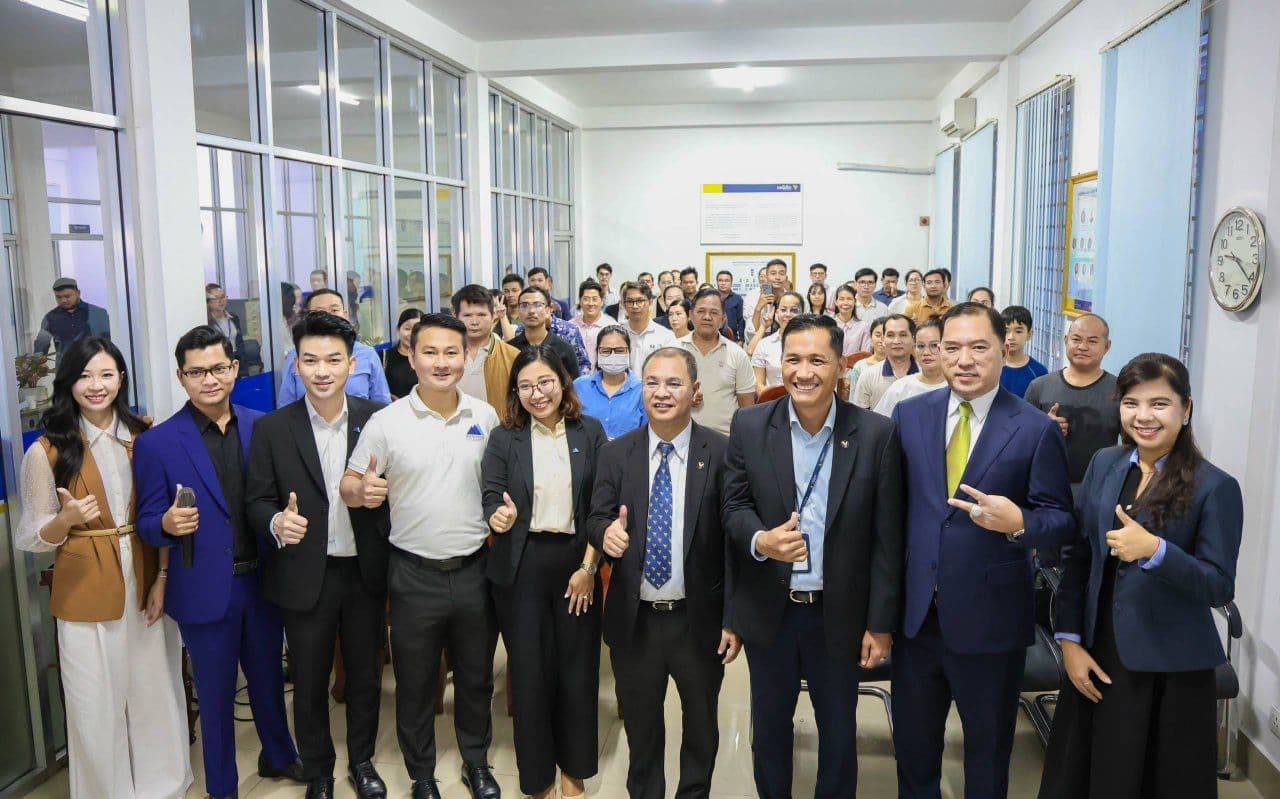
សិក្ខាសាលាអំពីការវិនិយោគមូលបត្រ ក្នុងកម្មវិធីរ៉ូដសូ លើកទី៣ នៅខណ្ឌមានជ័យ
Roadshow5 កញ្ញា 2026

សិក្ខាសាលាអំពីការវិនិយោគមូលបត្រ ក្នុងកម្មវិធីរ៉ូដសូ លើកទី៣ នៅខណ្ឌមានជ័យ

ក្រុមហ៊ុន បេនចារ៉ាន អ៊ែសេត មេនេចម៉ិន (ខេមបូឌា) ម.ក សហការជាមួយ ក្រុមហ៊ុនមូលបត្រ អេស៊ីលីដា ម.ក និងសាខាក្រុមហ៊ុនក្នុងស្រុកធនាគារអេស៊ីលីដា ភីអិលស៊ី (ខណ្ឌមានជ័យ-សង្កាត់បឹងទំពុនទី១) បានរៀបចំដោយជោគជ័យនូវសិក្ខាសាលាស្តីពី “ឱកាសមាសនៃការវិនិយោគមូលបត្រ” ដែលជាផ្នែកមួយនៃដំណើរការផ្សព្វផ្សាយកម្មវិធីរ៉ូដសូ លើកទី៣។ សិក្ខាសាលានេះបានរៀបចំឡើងនៅសាលប្រជុំរបស់សាខាក្រុមហ៊ុនក្នុងស្រុកធនាគារអេស៊ីលីដា ភីអិលស៊ី (ខណ្ឌមានជ័យ-សង្កាត់បឹងទំពុនទី១) កាលពីព្រឹកថ្ងៃទី០៥ ខែកញ្ញា ឆ្នាំ២០២៦។ សិក្ខាសាលានេះរៀបចំឡើងក្នុងគោលបំណងលើកកម្ពស់ការយល់ដឹងអំពីការវិនិយោគក្នុងទីផ្សារមូលធននិងមូលនិធិមូលបត្រកម្មសិទ្ធិអាស៊ី ប៊ីអេអឹមស៊ី (BAEF) ដែលជាគម្រោងវិនិយោគរួម (CIS)។ យើងខ្ញុំសូមថ្លែងអំណរគុណយ៉ាងជ្រាលជ្រៅចំពោះដៃគូសហការនិងសិក្ខាកាមទាំងអស់ ដែលបានចូលរួមនិងគាំទ្រដល់ការរៀបចំសិក្ខាសាលានេះប្រកបដោយជោគជ័យ។ សូមថ្លែងអំណរគុណជាពិសេសចំពោះលោក សុខ ច័ន្ទតុលា អនុប្រធានផ្នែកលក់និងទីផ្សារ នៃក្រុមហ៊ុន បេនចារ៉ាន អ៊ែសេត មេនេចម៉ិន (ខេមបូឌា) ម.ក ដែលបានចូលរួមជាវាគ្មិនសម្រាប់បទបង្ហាញដ៏មានអត្ថន័យនិងខ្លឹមសារយ៉ាងមានសារៈសំខាន់អំពី “មូលនិធិមូលបត្រកម្មសិទ្ធិអាស៊ី ប៊ីអេអឹមស៊ី (BAEF)”។ យើងខ្ញុំរីករាយនិងស្វាគមន៍អ្នកទាំងអស់គ្នាក្នុងកម្មវិធីបន្ទាប់។

អាន 1 នាទីអានបន្ថែម
2026 August Market Outlook: Navigating Volatility
Market Outlook1 កញ្ញា 2026

2026 August Market Outlook: Navigating Volatility

Concerns around the durability of AI-related capital expenditure and intensifying competition triggered a sharp sector sell-off after a mid-July peak. Investor sentiment turned more discerning on the back of earnings season, and questions arose regarding how sustainable the AI investment pace is without eating into cash generation. Capital rotated out of semiconductors and into energy, financials and value stocks, shifting to markets and names seen as less exposed to a single-theme correction. Layered on top was renewed Middle East escalation and its effect on rates expectations. Brent crude spiked back above $100/barrel intermittently after the US reinstated a naval blockade on Iran and announced plans to impose a levy on cargo transiting Hormuz, although the levy was never implemented. This revived inflation concerns and caused markets to price a reduced likelihood of further Fed easing. Elevated US bond yields further weighed on stocks. Looking ahead, renewed conflict or another AI-related pullback could swiftly unwind recent sentiment gains and force a repricing of both rates and earnings expectations. Against this backdrop, we continue to favour a diversified, bottom-up approach that balances exposure to structural AI and technology themes with quality, less crowded names to weather through volatility.

អាន 1 នាទីអានបន្ថែម
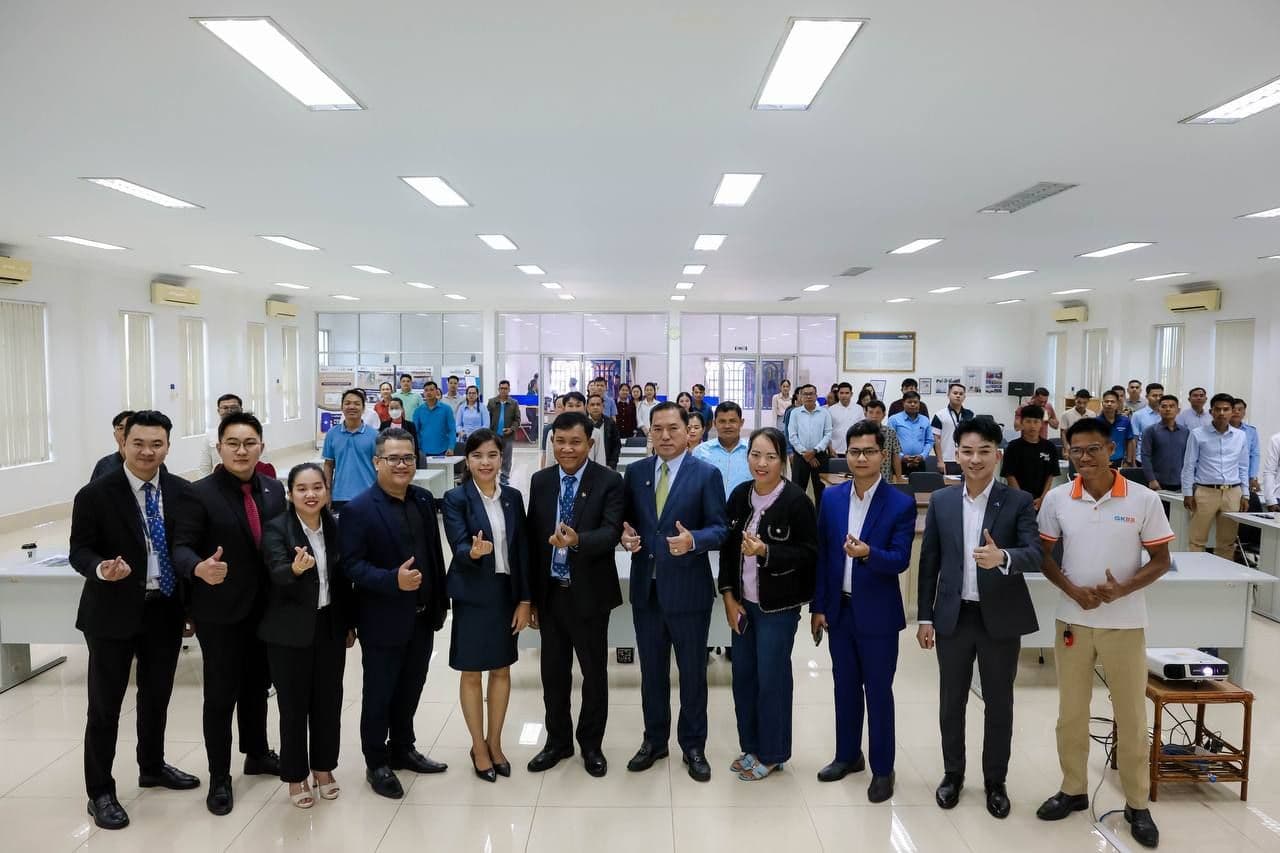
សិក្ខាសាលាអំពីវិនិយោគមូលបត្រ ក្នុងកម្មវិធីរ៉ូដសូ លើកទី៣ នៅខេត្តស្វាយរៀង
Roadshow22 សីហា 2026

សិក្ខាសាលាអំពីវិនិយោគមូលបត្រ ក្នុងកម្មវិធីរ៉ូដសូ លើកទី៣ នៅខេត្តស្វាយរៀង

ក្រុមហ៊ុន បេនចារ៉ាន អ៊ែសេត មេនេចម៉ិន (ខេមបូឌា) ម.ក សហការជាមួយ ក្រុមហ៊ុនមូលបត្រ អេស៊ីលីដា ម.ក សាខាក្រុមហ៊ុនក្នុងស្រុកធនាគារអេស៊ីលីដា ភីអិលស៊ី (ខេត្តស្វាយរៀង) បានរៀបចំដោយជោគជ័យនូវសិក្ខាសាលាស្តីពី “ឱកាសមាសនៃការវិនិយោគមូលបត្រ” ដែលជាផ្នែកមួយនៃដំណើរការផ្សព្វផ្សាយកម្មវិធីរ៉ូដសូ លើកទី៣។ សិក្ខាសាលានេះបានរៀបចំឡើងនៅសាលប្រជុំរបស់សាខាក្រុមហ៊ុនក្នុងស្រុកធនាគារអេស៊ីលីដា ភីអិលស៊ី (ខេត្តស្វាយរៀង) កាលពីព្រឹកថ្ងៃទី២២ ខែសីហា ឆ្នាំ២០២៦។ សិក្ខាសាលានេះរៀបចំឡើងក្នុងគោលបំណងលើកកម្ពស់ការយល់ដឹងអំពីការវិនិយោគក្នុងទីផ្សារមូលធននិងមូលនិធិមូលបត្រកម្មសិទ្ធិអាស៊ី ប៊ីអេអឹមស៊ី (BAEF) ដែលជាគម្រោងវិនិយោគរួម (CIS)។ យើងខ្ញុំសូមថ្លែងអំណរគុណយ៉ាងជ្រាលជ្រៅចំពោះដៃគូសហការនិងសិក្ខាកាមទាំងអស់ ដែលបានចូលរួមនិងគាំទ្រដល់ការរៀបចំសិក្ខាសាលានេះប្រកបដោយជោគជ័យ។ សូមថ្លែងអំណរគុណជាពិសេសចំពោះ លោក តាំង ហយ បុគ្គលិកផ្នែកច្បាប់និងអនុលោមភាព នៃក្រុមហ៊ុន បេនចារ៉ាន អ៊ែសេត មេនេចម៉ិន (ខេមបូឌា) ម.ក ដែលបានចូលរួមជាវាគ្មិនសម្រាប់បទបង្ហាញដ៏មានអត្ថន័យនិងខ្លឹមសារយ៉ាងមានសារៈសំខាន់អំពី “តម្លៃនិងអត្ថប្រយោជន៍នៃការវិនិយោគក្នុងមូលនិធិមូលបត្រកម្មសិទ្ធិអាស៊ី ប៊ីអេអឹមស៊ី (BAEF) ”។ យើងខ្ញុំរីករាយនិងស្វាគមន៍អ្នកទាំងអស់គ្នាក្នុងកម្មវិធីបន្ទាប់។

អាន 1 នាទីអានបន្ថែម